
An analysis of 989 companies that account for 52 per cent of the total market capitalisation on the Bombay Stock Exchange shows net profit growth of 2.7 per cent over the previous year was reported mainly due to strong profit numbers registered by players in banking, cement, information technology, pharmaceuticals and fast moving consumer goods.

High interest rates have been discouraging fresh investments and dragged industrial production down for nearly two years now.
Mark-to-market losses, oil & gas companies drag profits; sales growth moderates
"We created a sense of a team, not individuals. We designed team measurable and not individual measurable. At the end of the day, we created a happy environment," said Gary Kirsten, coach of the World Cup-winning Indian cricket team.

Several fiscal and monetary incentives since December 2008 helped the industry to recover into a growth trajectory. The 10 per cent plus growth in manufacturing, basic goods, mining, electricity has been buoyed by these measures, Confederation of Indian Industry said.

India Inc's hiring activity witnessed a marginal decline in the month of April, owing to the ongoing appraisal season, but overall industries are upbeat about their hiring sentiment and 2011 is expected to be a landmark year for job creation, job portal Naukri.Com says.
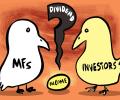
The combined dividend payout by early-bird companies -- those that have declared their results for FY21 -- is up 8.9 per cent, lower than the 21.9 per cent rise in in FY20 but ahead of the underlying growth in India Inc business last year. Combined net sales of these early birds were down 1.8 per cent last financial year while net profit was up 27.3 per cent in FY21. Some top companies that have stepped up dividend payout in FY21 include Hindustan Unilever, Indus Towers, Tata Steel, Ultratech Cement, Larsen & Toubro, Dabur, Asian Paints, and UPL. In contrast, banks have skipped dividends under an RBI diktat while companies such as Marico, TCS, Maruti Suzuki, and Godrej Consumer are paying lower dividends for FY21.

India Inc's investment spirit is down. A majority of leading CEOs expect domestic investments and money infusion abroad by Indian companies to grow by less than 10 per cent or to decline during 2012, in view of the current economic slowdown.

The employees, who took part in this study, agreed that monetary transaction at 39.2 per cent is the most prevalent form of corruption.
There has been a sharp improvement in the productivity of most of the companies, thus making the bottomline growth even stronger.

Industry chamber Ficci said, Japan as a nation would overcome the calamity to reassure its place in the comity of most prominent economies of the world.
India Inc said the Foreign Trade Policy would give a significant push to manufactured goods and agriculture- and labour-intensive exports.
India Inc (excluding trading and financial services companies) was sitting on a cash mountain of Rs 456,700 crore (Rs 4,567 billion) as on September 30, up 21 per cent from the same time a year before.
India Inc has expressed disappointment over the Reserve Bank of India's decision to keep interest rates unchanged. This, according to various industry associations, would result in huge capital inflows leading to further appreciation of the rupee.

Volatility in local share markets have hit India Inc's equity fund-raising plans, with the total deal value this year set to fall below the level seen in 2008.

The Year of India in Russia - as 2009 is officially known - has helped India Inc get into a long bear hug with the Russian consumer. They are lapping up everything - from Ratan Tata's marquee cars to Vijay Mallya's whisky.

India Inc preferred to tap other sources of funds - a cheaper option - even though bank funds were available in plenty.

According to the quarterly report, hiring sentiment saw a marginal improvement with the employment outlook index for the January to March quarter standing at 47 index points, one per cent higher than the previous quarter.

Green shoots evident, but worries remain.

Industry sources told India Abroad they wouldn't shed any tears if the legislation died in the House.

As per Hewitt's annual Salary Increase Survey 2009-10, the double-digit hike in salaries are anticipated for this year led by sectors like telecom, engineering, pharma and energy.
Operating margins improve, but sales still sluggish
According to a mid-year survey on 'Performance & Reward Trends' by Hewitt Associates, companies across industries are strongly differentiating rewards on the basis of performance but majority of them are not considering any layoffs or severe salary cuts in current fiscal. The survey revealed that 16 per cent of the companies surveyed have a salary freeze and were mainly organizations in the financial services, IT and ITeS sector.
A survey of CEOs shows corporate India is unsure about the party's ideology, with some feeling its left-of-the-centre politics can be detrimental in the long run.

Jobs are back and India Inc is witnessing an upsurge of 15 per cent in hiring trend, thanks to the improving economic climate. However, experts say it is too early to say that the situation has returned back to 'normalcy'.

In 2001-02, demand recession had clipped the sales growth rate of corporate India to 2.6 per cent from the double-digit one of the earlier years.
Hailing Narendra Modi's victory, India Inc hopes the incoming government would boost economic growth and create jobs.
Index measuring this at six-quarter high; however, economic & political volatility a concern.

Japan is expected to increase its investment target in India from the earlier 5 trillion yen ($34 billion) to almost 10 trillion yen.

The net sales growth declines 4.4% in September quarter, the second worst in eight years.
India Inc's initiative to adopt Industrial Training Institutes (ITIs) across the country is facing problems because of low level of cooperation on the field as well as red-tapism, industry lobby groups have claimed.

India Inc is staring at significantly higher compliance and governance costs, following the Securities and Exchange Board of India's (Sebi's) latest tightening of disclosure norms and regulations around the filling of key positions, the materiality of information, and third-party transfers. Recently, the securities market regulator amended the Listing Obligations and Disclosure Requirements (LODR) to introduce a raft of changes that will affect how listed companies go about transparency and disclosures. The new framework will further empower public shareholders and soon move towards a 'comply or be penalised regime or comply or explain' in the case of high-value debt-listed entities.

Capex plans for the next six months imply a 20 per cent increase in calendar 2010.
